

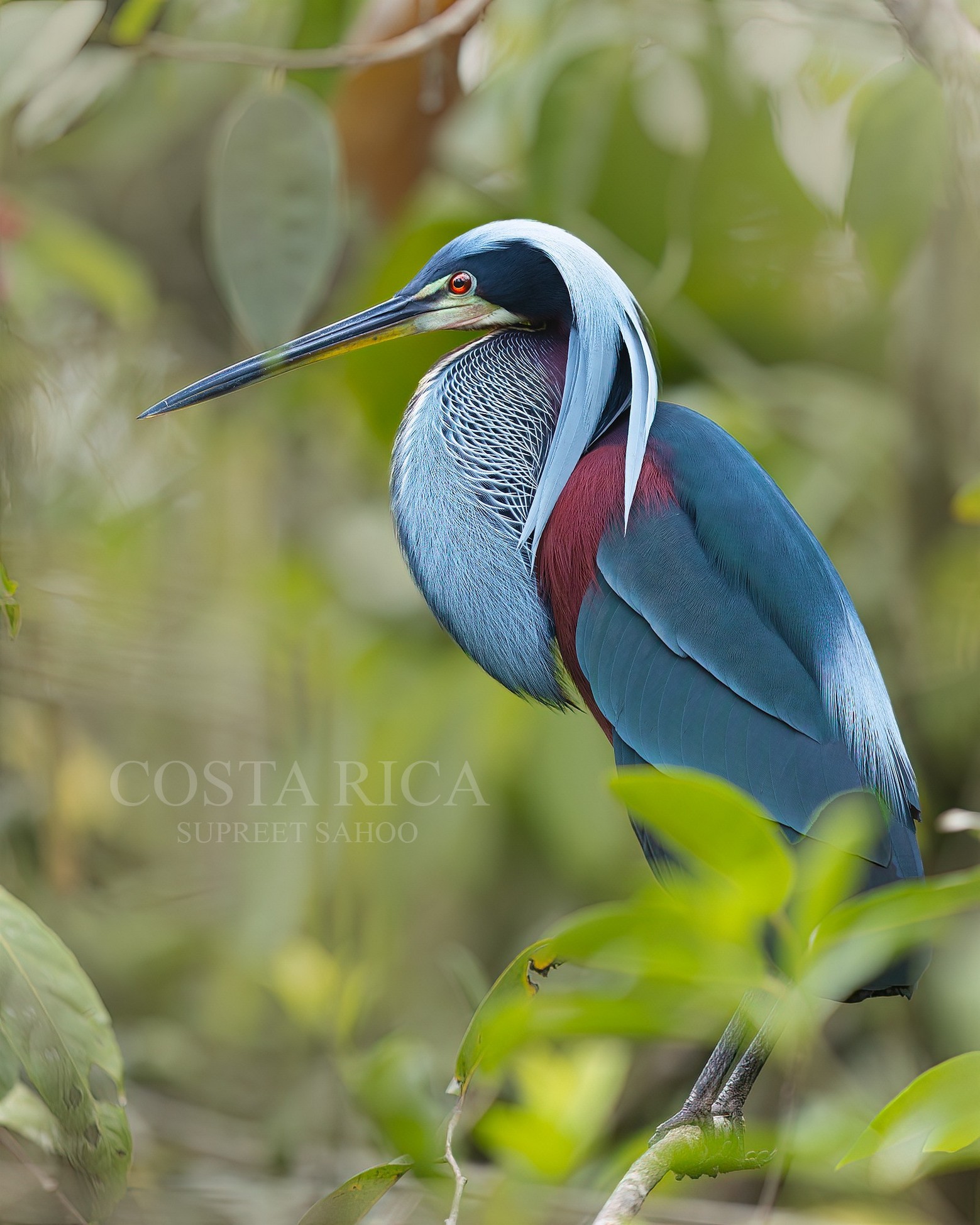
Some birds are beautiful. Some birds are rare. And then there are birds like the Agami Heron, a species that feels almost unreal when you finally see it through the lens.
Near Boca Tapada, in the northern lowlands of Costa Rica, I had the chance to visit one of the most extraordinary places I have experienced as a wildlife photographer: an active Agami Heron rookery hidden deep inside wetland habitat.
The journey itself was part of the story.
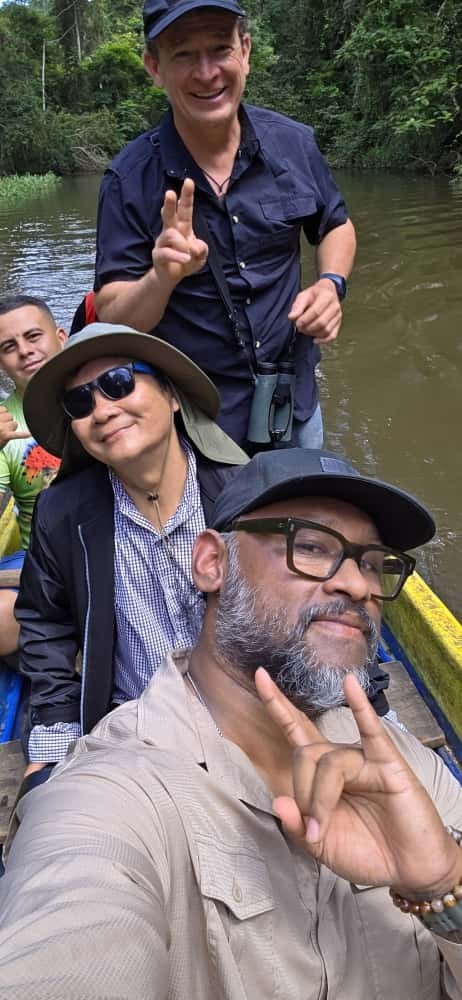
To reach the rookery, we first had to walk for about 35 minutes through humid forest, carrying our camera gear and moving slowly through the muddy trail. From there, we got into a small rowboat and continued for another 30 minutes through quiet waterways surrounded by thick tropical vegetation.
This was not a roadside birding stop. This felt like entering another world.
Then the forest opened.
By the time we arrived, the forest opened into something unforgettable. We were surrounded by hundreds of Agami Herons, along with egrets and other water birds moving, nesting, calling, and flying through the rookery.
Everywhere we looked, there was life. Agami Herons perched in the branches. Egrets moved through the colony. The air was filled with sound, movement, and the energy of a wild place that still feels untouched.
For a few moments, you almost forget about the camera. You just stand there and take it in
A bird that looks almost hand-painted.
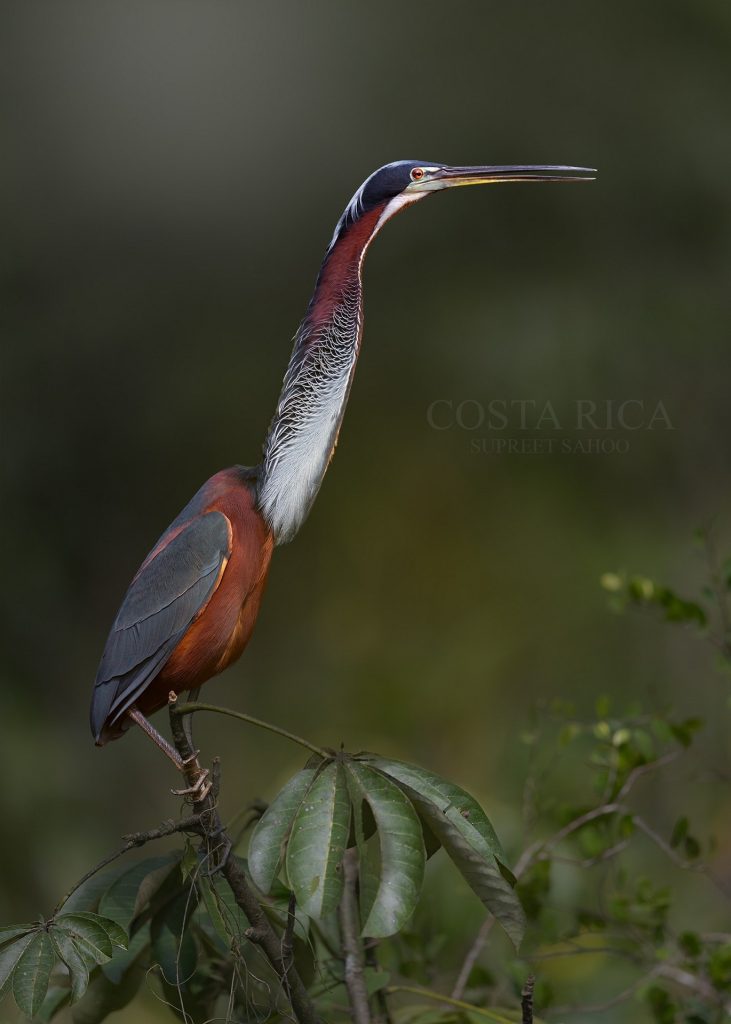
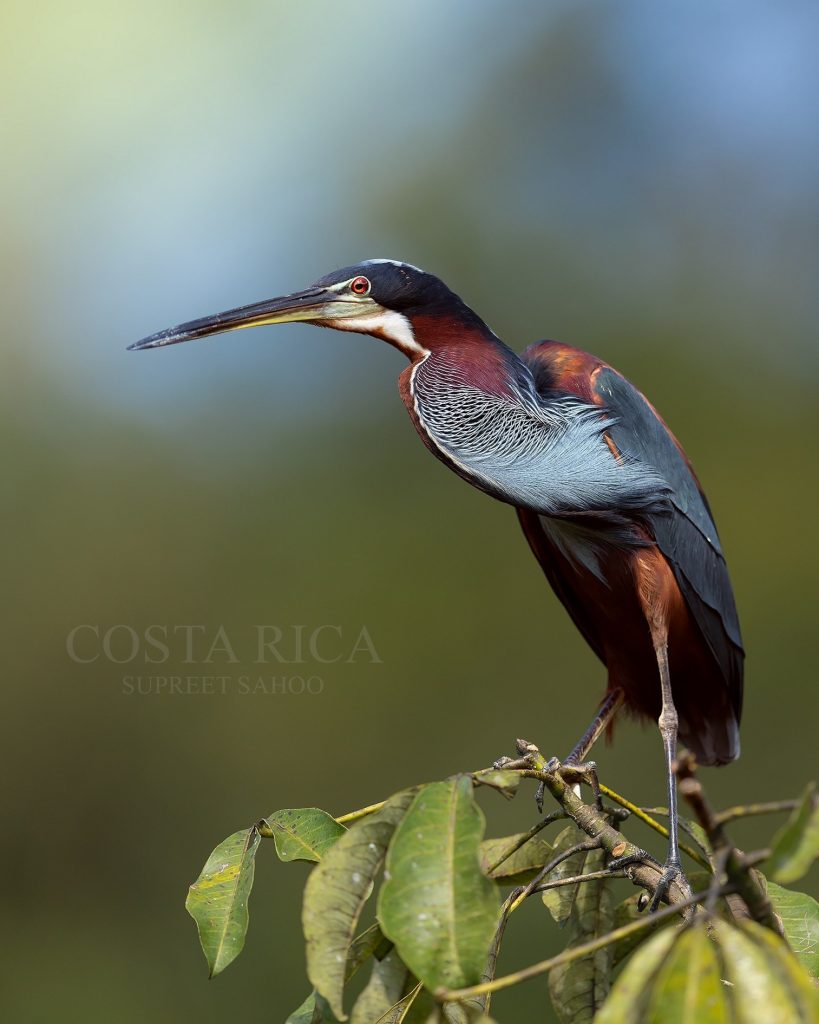
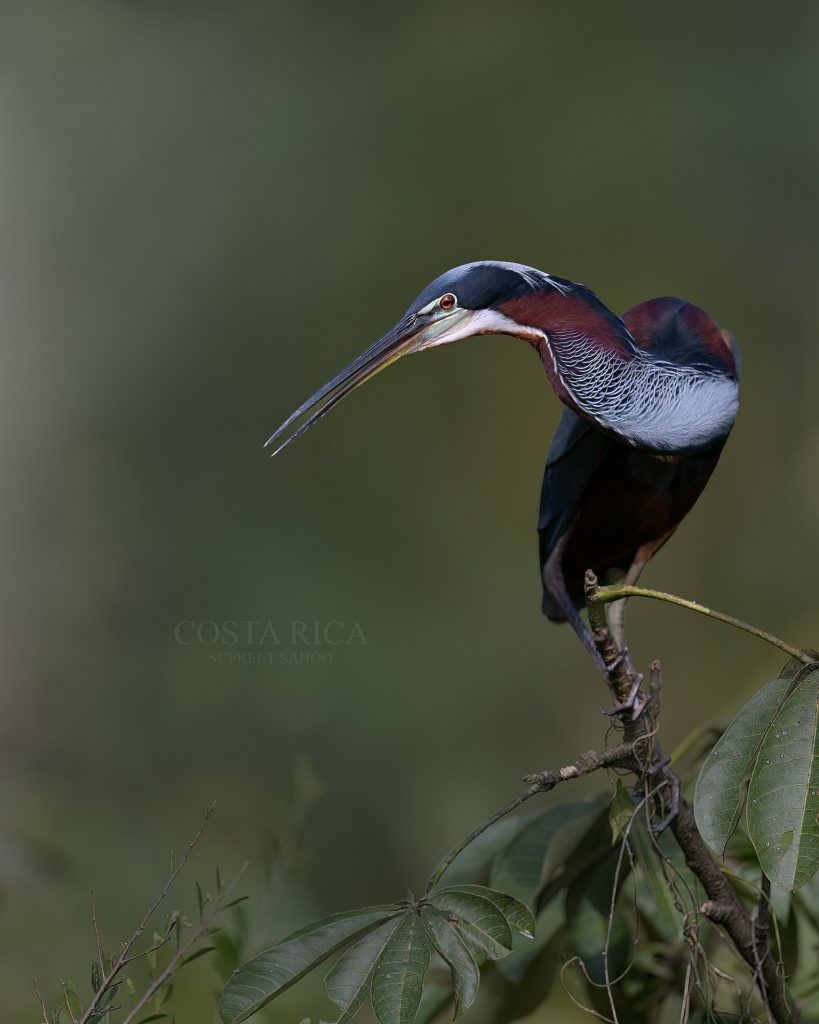
The Agami Heron is one of the most striking birds I have ever photographed. Its long dagger-like bill, deep chestnut body, dark green wings, powder-blue plumes, and fine white markings across the neck make it look almost hand-painted.
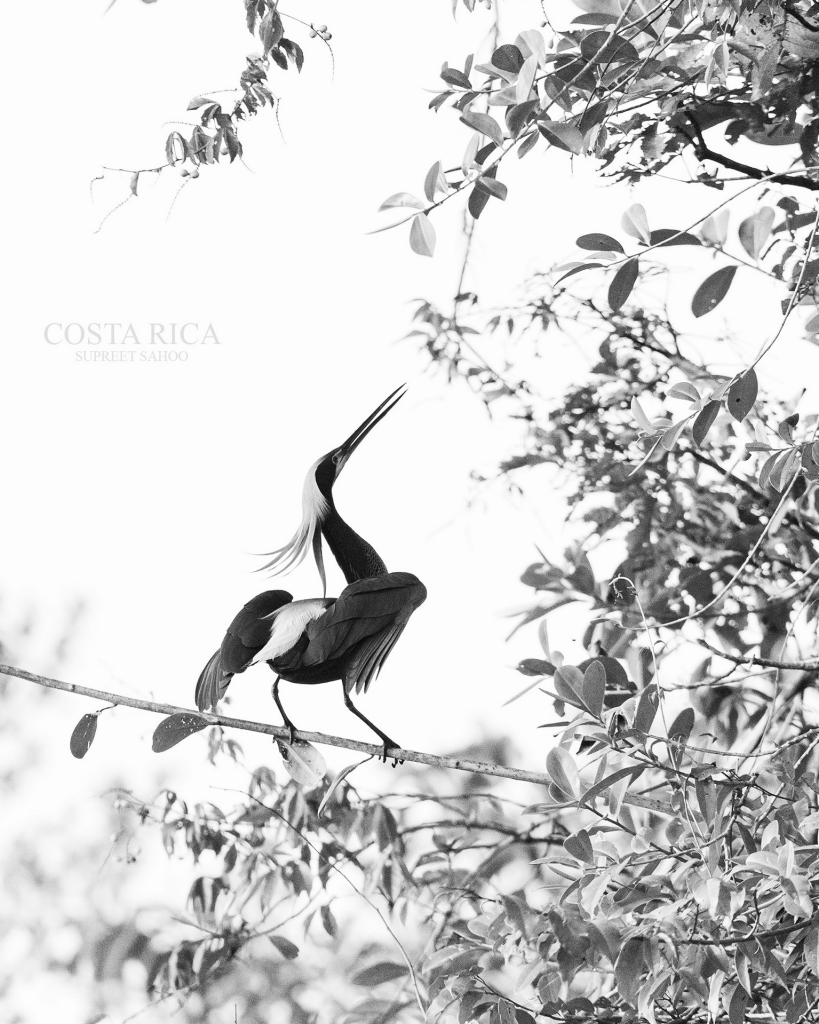
In some poses it looks elegant and still. In others, especially when it stretches its neck or displays, it looks dramatic, almost prehistoric.
Timing the light is everything.
The Agami Heron is not an easy bird to photograph. The habitat is dark. The branches can be messy. The birds are often partly hidden. And by the time you walk in and reach the rookery by boat, the light can already start getting tricky.
That is one of the biggest lessons from this location: timing matters.
Because reaching the rookery takes about 35 minutes on foot and another 30 minutes by rowboat, this is not a place where you can casually arrive and expect perfect conditions. For photography, the trip has to be planned carefully so we arrive when the birds are active and the light is still soft enough to work with.
Once the sun gets higher, the contrast becomes harder. The whites on the egrets can blow out, the darker tones of the Agami Herons can lose detail, and the beautiful colors on the bird can become much harder to expose properly.
When the timing is right, though, the results can be magical: soft light filtering through the wetland, clean backgrounds, rich color on the Agami Herons, and fine detail in those incredible breeding plumes.
The rookery rewards patience.
That is what makes this kind of photography so rewarding. It is not just about reaching the bird. It is about reading the light, understanding the habitat, working with the angles, and respecting the space.
The Agami Heron rewards patience. Sometimes it stays still, partly hidden behind leaves. Sometimes it stretches its neck and gives you that perfect profile. Sometimes it opens its bill or shifts position for just a second, and if you are ready, that moment becomes the image.
Inside the habitat, not outside it.
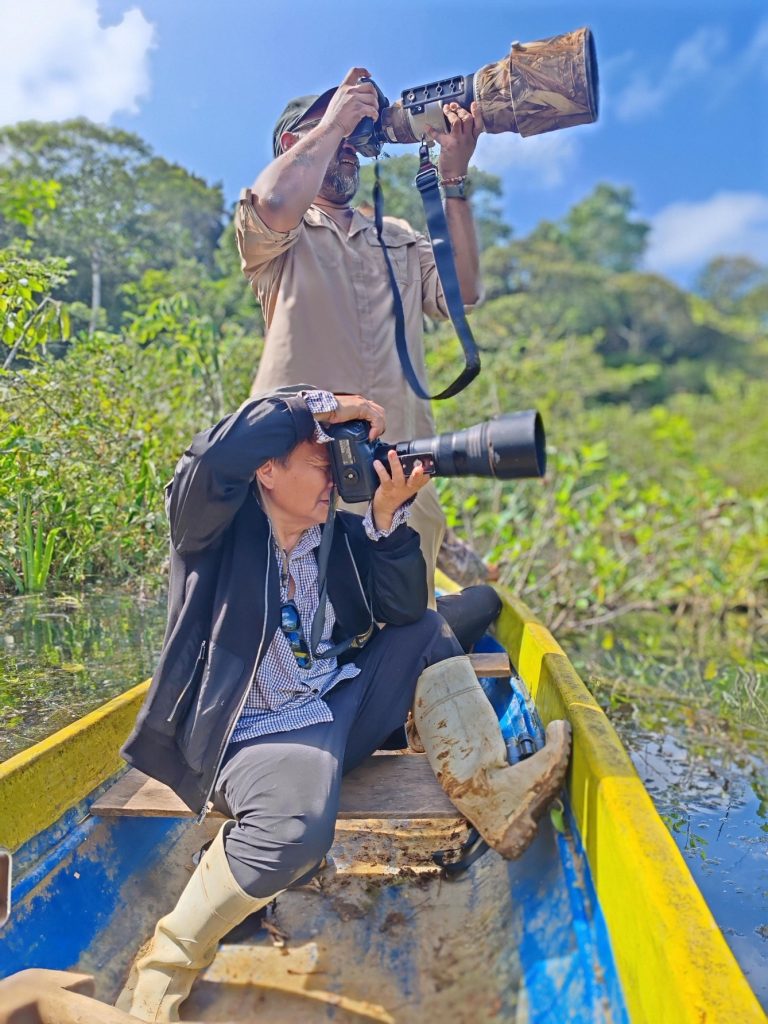
Photographing from the boat added another layer of challenge. You are balancing long lenses, movement, water, people, and limited space. Every small shift changes the angle. Every movement has to be slow and deliberate. But that is also what makes the experience feel real.
You are not separated from the habitat. You are inside it.
Why this place matters.
Beyond the photography, this visit was also a reminder of why places like this matter. Wetlands and flooded forests may not always get the same attention as famous national parks or big mountain landscapes, but they are incredibly important.
They hold nesting colonies, feeding areas, fish, insects, reptiles, and countless species that depend on these quiet, protected corners. Birds like the Agami Heron are ambassadors for habitats most people will never see.
Responsible birding and photography can help protect them. When local guides, lodges, conservation-minded travelers, and photographers work together, these places gain value beyond extraction or development. A bird like the Agami Heron becomes more than a name on a checklist. It becomes a reason to protect the forest, the water, and the communities connected to it.
Final thoughts.
For me, this was not just about getting photographs. It was about the whole experience: the walk, the mud, the boat ride, the changing light, the sound of the rookery, the challenge of working in a difficult environment, and the privilege of standing in front of one of the most beautiful herons in the world.
Boca Tapada has always been a special region for bird photography. But this Agami Heron rookery makes it extraordinary.
It is the kind of place that reminds you why we travel, why we wait, why we carry heavy lenses into uncomfortable places, and why wild habitats are worth protecting.
Some birds give you photographs.
The Agami Heron gives you a story.
.